


Fasting for Women: Purify, Regenerate, Reconnect
Updated: Sep 9
There are moments in life when you feel your body has had enough.
Enough of carrying, absorbing, running on empty.
You look for something real, something deep — that doesn't involve a prescription or a supplement label.
Something your body already knows how to do, instinctively, as it always has.
Fasting is exactly that.
It 's not a Silicon Valley trend.
It's not a punishment.
It is a natural, physiological process that humans and animals have always practised in times of illness or when regeneration was needed.
And for women, it's a health tool of rare power — provided you truly understand how to approach it.
In this article, I invite you to explore what fasting really does in the body, why it can transform your relationship with your health, and how to adapt it to your body as a woman — to your cycles, to your seasons of life.
Fasting: a natural and physiological process
Fasting means giving the body rest through the absence of food.
Put like that, it can sound frightening. But let's understand what is really happening inside.
Digestion is one of the most energy-intensive functions in the body.
It mobilises a considerable share of our resources every single day.
When we stop eating, the body saves that energy and naturally redirects it toward other functions — in particular, internal cleansing.
It is a process that activates by itself, automatically. It requires no external intervention: it simply requires that we make space for it.
Here is what happens in the body during a fast.
First, the body uses up its circulating glucose reserves, then the glycogen stocks stored in the liver.
Then, around the second or third day, it shifts into what is known as ketosis: it begins drawing on fat reserves to produce energy.
This is also the moment when toxins bound to fat cells are released.
And if the fast continues, autophagy activates.
The body then uses its old cells, degenerated tissues, small cysts — like bricks being taken apart to build new ones.
It recycles the old to make the new.
This is a form of deep cellular regeneration, orchestrated by the body itself, without any medication.
This process is natural. It has been encoded in our physiology for millennia.
Our ancestors had access to it regularly, activating metabolic functions our modern lives — where food is available twenty-four hours a day — rarely call upon.

Why fast? Several good reasons
One rarely fasts for a single reason.
And that is as it should be, because the effects of fasting are multidimensional.
The first reason, fundamental, is digestive rest.
Our digestive system is today overloaded by meals that are too frequent, too large, and often poorly suited in quality.
It needs to rest from time to time, like any organ.
Offering it that rest allows it to recover and function better afterwards.
The second reason is deep cleansing — detox.
Clearing the toxins accumulated from food, the environment, stress.
Fasting activates and optimises the immune system.
It is a wonderful solution for caring for your health preventively, well before illness takes hold.
The third reason, less often mentioned, is one of the most precious: self-knowledge.
Fasting is also about observing yourself, discovering things about yourself, gaining access to your inner depths.
Our relationship with food often reveals emotional patterns, fears, automatic behaviours we never suspected.
Finally, there is the psycho-emotional dimension — rarely spoken of enough.
With the body freed from toxins and relieved of digestive work, great mental and emotional clarity is common.
Fasting will not solve all your problems, but it may allow you to see more clearly and make better decisions.

Hygienic fasting: rest, silence, and deep reconnection
There are several ways to approach fasting.
In my practice, I favour what is called hygienic fasting.
The central idea is simple: give the body as much rest as possible — not just digestive, but physical, mental, and social rest too.
Concretely, this means reducing intense physical activity to a minimum, setting aside exhausting social interactions, putting the phone away, truly resting.
No competition. No expectations. You let go and accept what arises.
Why this approach?
Because our vital energy is permanently distributed between digestion, physical activity, and mental activity.
When all of this is placed at rest, what I call energetic inversion occurs: the body redirects all that energy inward, toward cleansing and regeneration.
It is not always the most comfortable approach at first, but it is by far the most effective.
What I can tell you is that people who come on fasting retreats often leave saying: "Wow, it was a real transformation — an incredibly deep experience, I didn't expect that at all."
A transformative experience, sometimes even transcendent.
Fasting in a natural setting, well supported, allows you to reconnect with the natural elements and therefore with your own inner nature.
Silence also has its place in this process. It is not there to be austere.
It is there to allow you to hear what the body has to say, to welcome what surfaces, to let regeneration happen without noise.
Preparing for a fast: the dietary transition
A well-conducted fast does not begin the day you stop eating.
It begins several days — even several weeks — before.
The pre-fasting dietary transition is a crucial step, often underestimated.
It consists of progressively removing certain foods so the body can prepare gently for the restriction ahead.
Without this preparation, cleansing crises can occur at the start of the fast: headaches, nausea, deep fatigue, low mood.
The transition allows you to avoid these discomforts and enter the fast more serenely.
Concretely, the idea is to gradually lighten the diet — removing the heaviest things first: processed foods, stimulants, then progressively animal proteins, gluten, dairy. In parallel, more fresh fruits and vegetables, juices, raw foods.
Then you progressively remove animal proteins, gluten, dairy products, and grains.
In parallel, you increase fresh fruits and vegetables, juices, raw foods.
Everything is personalised depending on where you are starting from.
This phase is ideally personalised.
We do not all start from the same point.
Herbal teas can accompany this period: diuretics, liver support, skin, mucous membranes — all depending on your vital terrain.
Being supported is precious, especially for a first fast.
Not because fasting is dangerous, but because you should not set off on an adventure without a map.

Fasting and women: adapting to your cycle
As a woman, you may often wonder whether fasting is right for you. The answer is yes.
Fasting is well suited to women and is very useful for deep regeneration.
Well supported, you can fast at almost any age, adapting the protocol to each person.
For women who still have their periods, it is relevant to adapt fasting to the menstrual phase.
You can fast during your period — the body is in an intense elimination process at that time, so the protocol is simply adapted.
You can also fast very well at every phase of the cycle — follicular, luteal — we simply adapt the approach to each phase.
Fasting is particularly recommended in the pre-conception period, to prepare the body to welcome a pregnancy in the best possible conditions.
Cleansing the body before conceiving is one of the most powerful gifts a woman can offer her future child — and herself.
After having children, once they are weaned and once you have recovered enough energy and vitality, fasting can be a beautiful way to find yourself again.
And in pre-menopause or post-menopause, fasting is equally indicated.
Menopause is not a disease. In Asia, it is traditionally associated with wisdom, with the passage into another feminine power.
That is the spirit in which I like to approach it.
Refeeding: the most important step
There is a saying in the fasting world: anyone can abstain from food, but only the wise person knows how to eat again correctly.
Post-fast refeeding is without doubt the most crucial step of the fast.
It is the step on which the integration of the benefits gained during the fast depends.
Refeeding too quickly, with unsuitable foods or in too large a quantity, can undo what a week of internal work built.
The refeeding period should ideally be the same length as the fast itself.
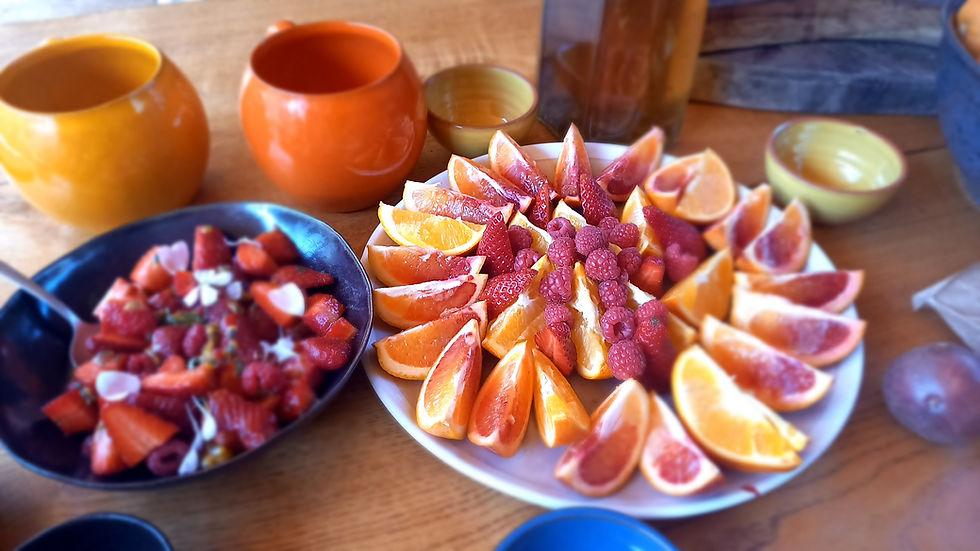
You generally begin with vegetable broth, then simple vegetable juices, then the first solid foods — always plant-based, living, consumed in small quantities, one food at a time, chewed slowly, in calm.
This moment of refeeding, when you do it truly well, is an extraordinary sensory experience.
You rediscover foods as if for the first time. An explosion of flavours, a myriad of scents.
Refeeding is also a time of great vulnerability to compulsions.
That is why emotional support makes an enormous difference at this stage.
Being supported, reassured, given concrete practical guidance to avoid giving in — this is what allows you to extend and anchor the benefits of fasting over time.
Fasting in nature, in Portugal
Fasting is one thing. Fasting in nature is another.
When the body is freed from digestive work and the environment is soothing, something particular happens: you reconnect with your own inner nature.
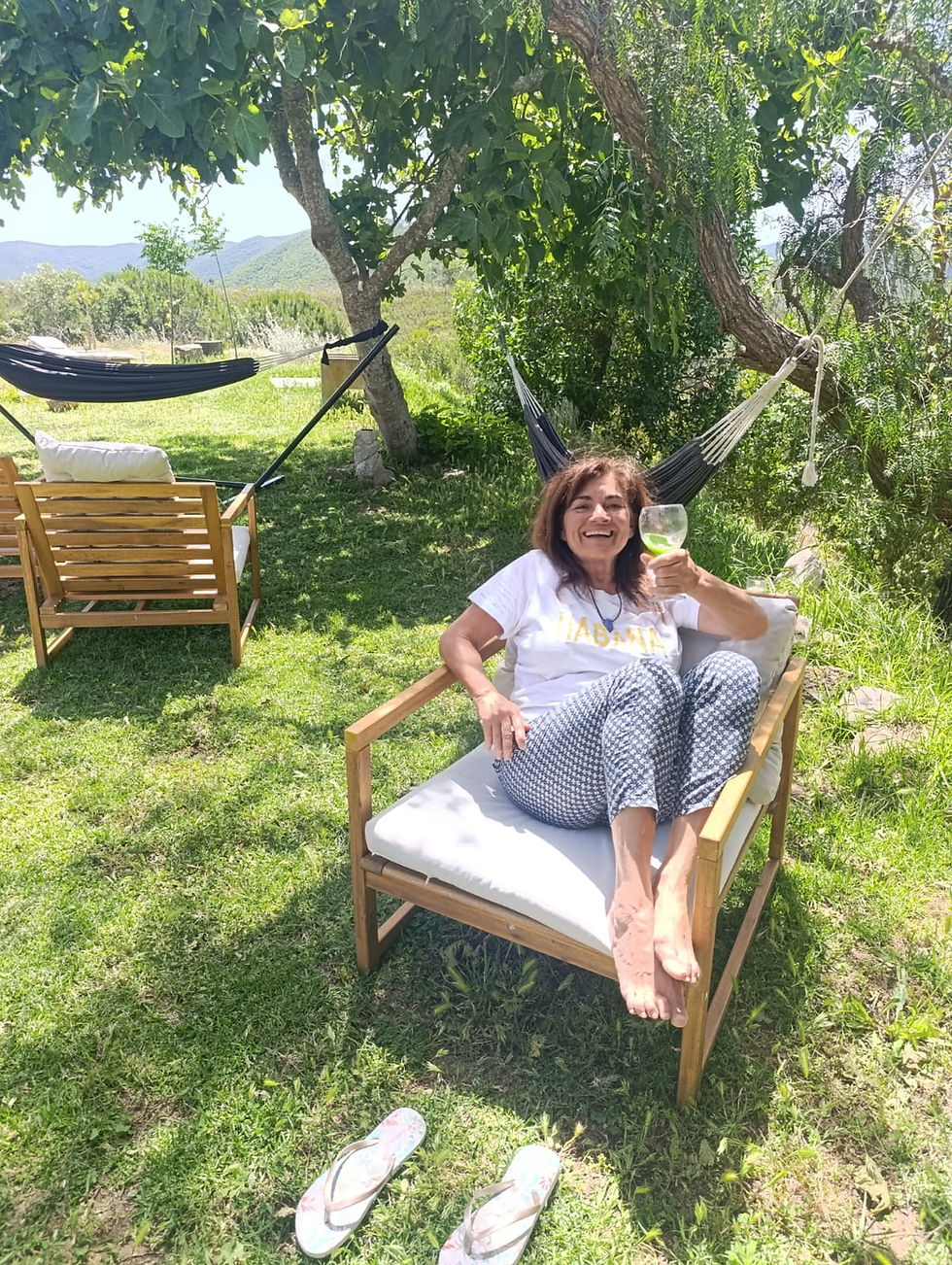
I organise fasting retreats in Portugal, near Aljezur in the south of the country, in a natural setting connected to trees, sunlight, and the southern air.
The programme adapts to each participant: a preparation day, several days of personalised fasting according to your vital terrain and your reactions, then the refeeding days — equally guided.
Each day is punctuated with gentle activities: group discussions about fasting, health, and cycles.
Practical workshops, breathwork, relaxation, silence, time for yourself.
Herbal teas, broths, juices. Moments of sharing and also moments of inner solitude — necessary ones.
Everything is designed to help the body regenerate and the mind truly unwind.
If you cannot travel, remote accompaniment is also available to guide you through a fast at home — with personalised preparation, daily support, and guidance for refeeding.
Conclusion
Fasting is not deprivation. It is a gift.
It is offering your body the pause it never has time to take.
It is activating regeneration processes that our current way of life rarely allows to express themselves.
It is reconnecting with yourself — with your sensations, your instinct, your inner power as a woman.
Well prepared, well guided, well lived: fasting is the most powerful health tool I know for moving toward genuine autonomy in your own health.
I say this from experience — because I practise it myself, regularly, and because I have accompanied many women through this transformative experience.
If you feel the call, if you are curious, if your body is sending you signals you no longer know how to interpret — I invite you to explore fasting gently, with great respect for yourself.
I accompany you in personalised fasting retreats in the heart of nature in Portugal, in Aljezur, or in individual distance consultations.
Every accompaniment is adapted to your situation, your vitality, your season of life.
Contact me to find out more, ask your questions, or book your retreat.
www.fannynaturo.com — fannynaturo@mailo.com
Go Further
Ready to take the first step? I accompany you in a personalised consultation to answer your questions and find the right approach for your situation.


Comments